
Several prices for the same job are useful, but the lowest number alone cannot tell you what you will receive. Local service quotes may cover different preparation, materials, labour, timelines or cleanup. Dr. Octopus helps customers describe a request and review available business offers. Compare the details carefully; the final hiring decision always remains yours.
Quick Answer: What Should You Compare in a Service Quote?
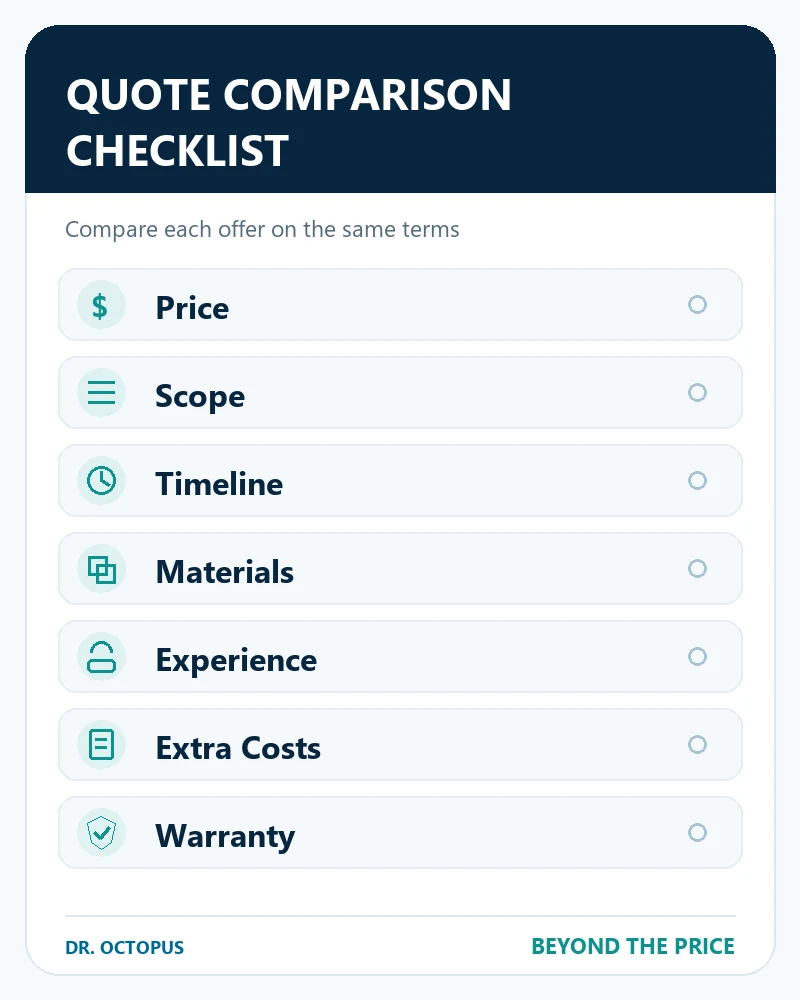
Compare total price, scope of work, materials, timeline, relevant experience, possible additional costs, warranty or follow-up terms, and communication quality. Give each provider the same project details, then ask about missing or unclear items in writing. A useful quote explains what is included, what is excluded and what could change the final cost.
Why You Should Compare More Than One Quote
Multiple quotes reveal different approaches, materials, start dates and interpretations of your request. For substantial renovations, the Government of Canada's Office of Consumer Affairs suggests meeting at least three potential contractors and comparing the same specifications. A small or urgent job may need a different approach.
An unusually low price is a question, not proof of a problem. A provider may use a simpler method, have lower overhead or include fewer services. Ask each business to explain its scope, assumptions and schedule before deciding. Their willingness to answer can also tell you how communication may work during the job.
Price Is Important — But It Is Not the Only Factor
Imagine two hypothetical quotes: A is $2,500 and B is $3,200. These are examples, not Canadian market prices. B might include preparation, better materials and disposal while A covers labour only. A higher price is not automatically better, either.
Compare the same work side by side. Ask what excluded cleanup would cost and what happens if a material allowance is exceeded. If a provider offers an optional upgrade, separate it from the base price so you can compare like with like.
7 Things to Compare in Every Service Quote
1. Scope of Work
Look for agreed tasks, areas and preparation. Does the quote include installation, testing, cleanup and disposal where relevant? What is excluded? “Repair bathroom” is harder to compare than a description of the affected area and intended finish. Ask providers to note assumptions.
2. Total Price and Pricing Structure
Is the amount a fixed price for a defined scope, an hourly rate or an estimate? Check taxes, materials, travel and payment milestones. Ask: What could change the final price, and how would I approve it? Terms and consumer rights vary by location and agreement.
3. Materials and Products
Confirm included materials, type or model where relevant, and who buys them. Ask whether substitutions need approval and could affect price or warranty. Material quality can explain differences between otherwise similar contractor estimates.
4. Timeline
Compare start date, duration and likely completion. Materials, access, weather or inspections may affect timing. A lower price may not suit an important deadline. Ask for a realistic window and how changes will be communicated. If timing is critical, state that in your request and record any agreed deadline.
5. Experience and Relevant Work
Look for work like yours, not just years in business. Review available profiles, comparable projects, portfolios and feedback. Ask how the provider would approach your problem, especially any uncertain conditions. A recent example of similar work may be more useful than a broad claim. Verify important qualifications and references independently.
6. Additional Fees and Exclusions
Some jobs may involve travel, disposal, extra labour, materials, subcontracting or scope changes. Not every quote contains these fees. Ask what is excluded and how unforeseen work would be priced and approved.
7. Warranty and Follow-Up Support
Ask what happens after completion if there is a problem. Is workmanship follow-up offered? Is there a separate product warranty? Check contact details, exclusions and costs, including labour or travel for a return visit. Do not assume every service includes a warranty; record important promises in writing.
How to Recognize a Strong Quote
A strong quote generally makes clear:
- the work to be done, including preparation and cleanup where relevant;
- materials or product assumptions and what is excluded;
- the total or estimated cost, taxes and payment terms;
- the start window and expected duration;
- the business's contact information;
- assumptions, possible extra charges and the approval process for changes.
Detail should fit the job. For substantial work, ensure the final agreement is clear enough for both sides to use later.
Red Flags When Comparing Quotes
Pause if scope is vague, prices change without explanation, fees appear unexpectedly or verbal promises disappear from the written version. Pressure to accept immediately and refusal to clarify details deserve attention. These signs call for questions, not assumptions about intent.
Should You Always Choose the Cheapest Quote?
No. A cheaper quote can be legitimate and right for you. Compare scope, experience, timeline, communication and included work. Ask for a revised price if a quote omits needed materials or cleanup. Choose the terms that fit your project and budget.
How Dr. Octopus Helps Simplify Quote Comparison
Customers with an account can post a service request with a description, budget and desired date. Businesses that can view the opportunity may submit an offer with a price, timeframe and details. Customers can review available offers in their dashboard, compare what each business proposes, look at business profiles, ask follow-up questions and choose for themselves. Responses vary by request and participating businesses; Dr. Octopus does not select a provider or verify every quote claim.
Explore service categories, our guide to finding trusted local professionals, and seven questions to ask before hiring.
What Information Should You Include in Your Request?
Explain the problem, desired result and location or service area. Add a realistic desired date and budget where useful. For work that depends on size or access, include measurements, known damage, building rules or access restrictions. A photo or relevant file can help when appropriate; avoid sharing sensitive information you do not need to share. In the Dr. Octopus request form, use the description and optional attachment for relevant detail.
Why Clear Requests Lead to Better Quotes
A clear brief reduces repeated questions and differences caused by missing facts. If a condition is unknown, say so rather than guessing. The provider can explain what can be priced now and what needs an inspection or later approval. Give each business the same core facts, photos and timing so differences in the resulting quotes reflect their approaches rather than different information.
A Simple Quote Comparison Checklist
- [ ] Is the scope clear, including what is not included?
- [ ] Are materials or products specified where relevant?
- [ ] Is the total price or estimate understandable?
- [ ] Are possible additional costs and approval steps explained?
- [ ] Is the timeline realistic for my needs?
- [ ] Does the business have relevant experience?
- [ ] Has communication been clear and professional?
- [ ] Are warranty or follow-up terms explained?
- [ ] Have I compared more than price?
Example Quote Comparison
This is a hypothetical painting job, for illustration only; the amounts are not market rates and no real businesses are represented. Use the factors to build your own comparison.
| Factor | Quote A | Quote B | Quote C |
|---|---|---|---|
| Price | $2,500 | $3,200 | $2,900 |
| Scope | Walls only | Prep, walls, trim | Prep and walls |
| Timeline | 2 days; later start | 3 days; earlier start | 3 days; date to confirm |
| Materials | Customer supplies | Specified paint included | Paint allowance included |
| Experience | Ask for similar work | Ask for similar work | Ask for similar work |
| Warranty | Ask for written terms | Follow-up stated; verify terms | Not stated; ask |
| Additional Fees | Cleanup extra | Disposal included | Extra prep possible |
The table highlights questions: What does “prep” mean? How much is cleanup? What if the allowance is exceeded?
Questions to Ask Before Accepting a Quote
Ask whether the price is final or estimated; what is included and excluded; what could add cost; who supplies materials; when work starts and ends; whether subcontractors are involved; how changes are approved; and what follow-up is offered. Get important answers in writing.
Final Thoughts
The best quote is not automatically the cheapest, most expensive or fastest. Choose the scope, cost, experience, timing and communication that fit your project. Compare like with like, clarify any exclusions, and keep important decisions in writing before work begins.