

Small home problems do not always stay small. A slow leak, damaged roof, recurring electrical warning or damp patch may spread if its cause remains unresolved. Not every mark or noise is an emergency.
Quick Answer: What Home Repairs Should You Never Ignore?
Watch for these signs:
- Water leaks and spreading stains.
- Electrical heat, burning odours, sparks or repeated breaker trips.
- Roof damage or water entering from above.
- Foundation cracks that change, admit water or appear with movement.
- Heating failures or unusual operation.
- Repeated drain problems or sewage backups.
- Persistent dampness or returning mould.
- Damaged windows, doors or exterior seals that admit water.
- Gutters and drainage that send water toward the home.
- Loose stairs, railings or visibly damaged supports.
For danger, move away and contact emergency services or the utility. Otherwise, document the signs and contact a qualified professional if the cause is unclear.
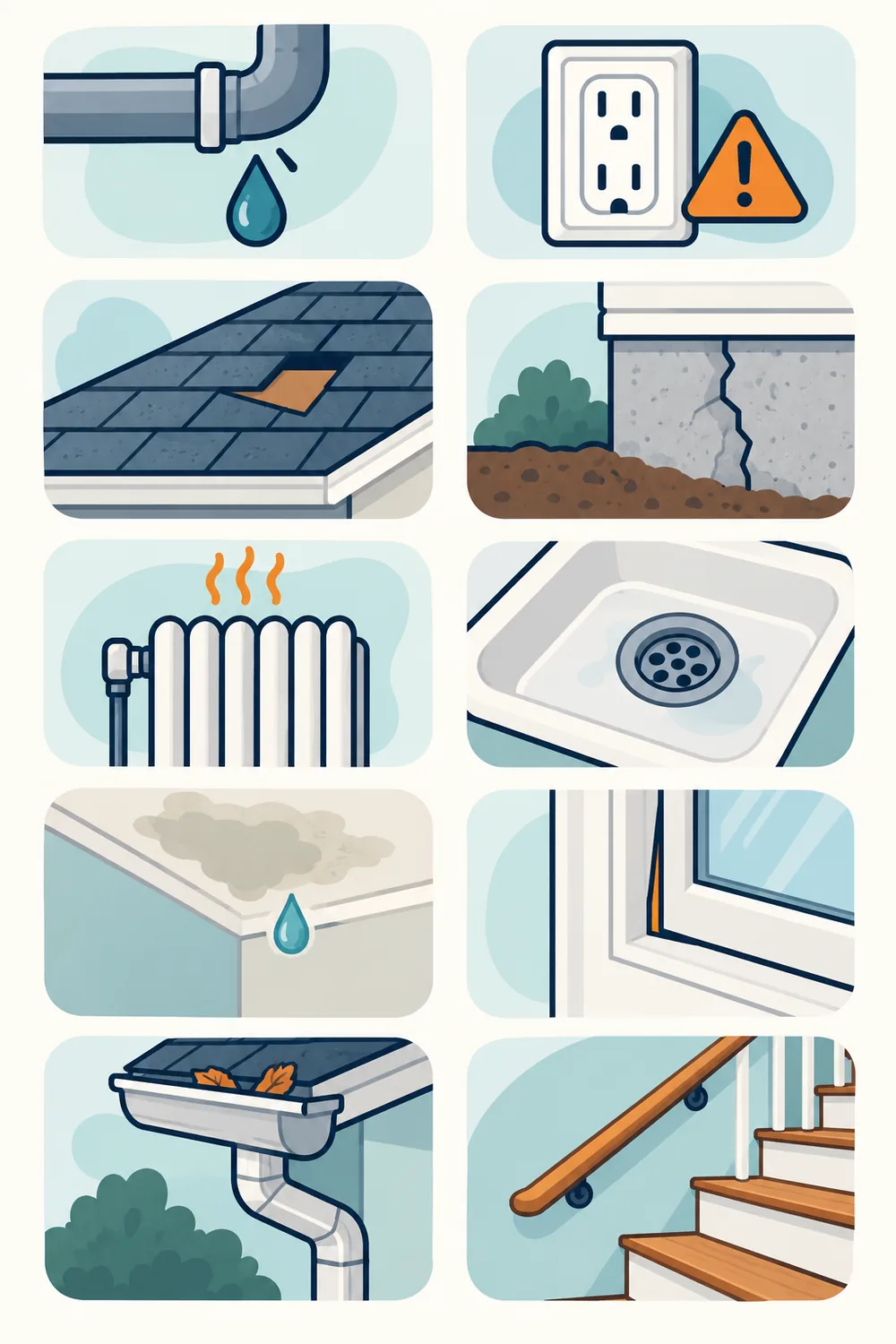
Illustrated signs: water, electrical, roof, foundation, heating, drains, moisture, windows, gutters and stairs.
1. Water Leaks
Dripping pipes, damp cabinets, recurring puddles, ceiling marks and stains that grow after rain or fixture use deserve attention. Water can damage finishes and create conditions for mould; the mark may be far from the source. If safe, note when it appears and move belongings away. Keep away from water near electrical equipment. A plumber or relevant professional can identify the cause. See our Canadian plumber cost guide for planning a non-emergency quote. Health Canada recommends addressing leaks and their source promptly.
2. Electrical Warning Signs
Repeated breaker trips, persistent flickering, a warm or discoloured outlet, sparking or a burning-plastic smell can indicate an electrical problem. Do not open a panel, touch damaged wiring or keep using a suspect outlet. Move away if there is smoke, fire or another immediate hazard and contact emergency services; otherwise arrange a qualified electrician's assessment. Ontario's Electrical Safety Authority homeowner handbook describes flickering and overheating signs. Our electrician selection guide explains provider questions.
3. Roof Damage
From the ground, you may notice missing shingles, damaged flashing or a sagging-looking roofline. Indoors, a new ceiling stain or drip after rain may be a clue. Do not climb onto the roof. Photograph what you can see safely, note when the leak occurs and ask a roofing professional to inspect it. Natural Resources Canada describes roofing and flashing as part of a home's moisture protection.
4. Foundation Cracks or Movement
Not every foundation crack means structural failure. Pay closer attention when a crack widens, water repeatedly enters, floors seem to change level, doors or windows suddenly stick, or visible movement accompanies the crack. Record the location and change without trying to diagnose it or alter a support. A qualified foundation or structural professional can assess significant or changing conditions. Water near the foundation may also point to drainage issues; Canada's flood-preparedness guidance identifies pooling and damp basements as reasons to investigate drainage.
5. Heating System Problems
Uneven heat, repeated shutdowns, new noises, unusual odours or a system that no longer heats adequately warrant a service call, especially during a Canadian cold spell. Do not dismantle a furnace or attempt gas-appliance work. If you smell gas, leave the area and contact your gas utility or emergency services from a safe location; do not operate switches or electronics nearby. Enbridge Gas gives this response for a suspected leak. A carbon-monoxide alarm is different: Health Canada says to leave immediately, call 911 and not re-enter. See our winter home-maintenance checklist for seasonal context.
6. Slow or Recurring Drain Problems
One slow sink may be limited to that fixture. Repeated clogs, several slow drains, gurgling, sewage odours or a backup suggest a broader issue. Keep people away from backed-up wastewater and tell a plumber which fixtures are affected and when it began. Do not pour chemicals into a system without understanding the risk. If sewage enters living space, seek prompt professional help.
7. Persistent Moisture or Mould
A musty smell, damp wall, returning discolouration or condensation that will not resolve can point to a moisture source. Plumbing, roof and exterior leaks, ventilation and condensation are possible contributors. Do not identify mould by appearance or cover the mark and assume the problem is solved. Health Canada's indoor moisture guide advises fixing the underlying source and seeking qualified help for large, hidden or recurring problems. If occupants have health concerns, speak with a healthcare professional.
8. Damaged Windows, Doors, or Exterior Seals
Visible gaps, wet frames, drafts, damaged seals and hard-to-operate openings can affect comfort and moisture control. Water entry can wet adjacent materials. Note whether it occurs during rain, snowmelt or condensation and ask a window or building-envelope professional to identify the source.
9. Gutters and Drainage Problems
Overflowing eavestroughs, disconnected downspouts, damaged sections or water collecting next to the foundation may direct runoff where it does not belong. Observe from a safe place during or after rain; do not use an unsafe ladder. Health Canada notes that working gutters and drainage away from the home help control moisture. A gutter or drainage professional can assess hard-to-reach areas and any water-entry pattern.
10. Loose Stairs, Railings, or Damaged Structural Elements
A loose handrail, damaged step, unstable deck board, sagging area or visibly damaged support may be a fall or structural concern. Keep people away from an area that feels unstable and have an appropriate professional evaluate it. Our reliable-contractor guide offers questions for evaluating a provider.
Which Home Repairs Are Most Urgent?
High priority: active water entering the home, electrical heat or smoke, a suspected gas leak or CO alarm, sewage backup, major roof leakage or an unstable structure. Move away from immediate hazards and use emergency or utility services when appropriate.
Plan prompt assessment: recurring drains, water near the foundation, persistent dampness, damaged exterior seals and gutters that are no longer directing water properly.
Usually routine: cosmetic scuffs and minor finish wear without active damage. Actual urgency depends on the condition; this guide cannot replace an on-site assessment.
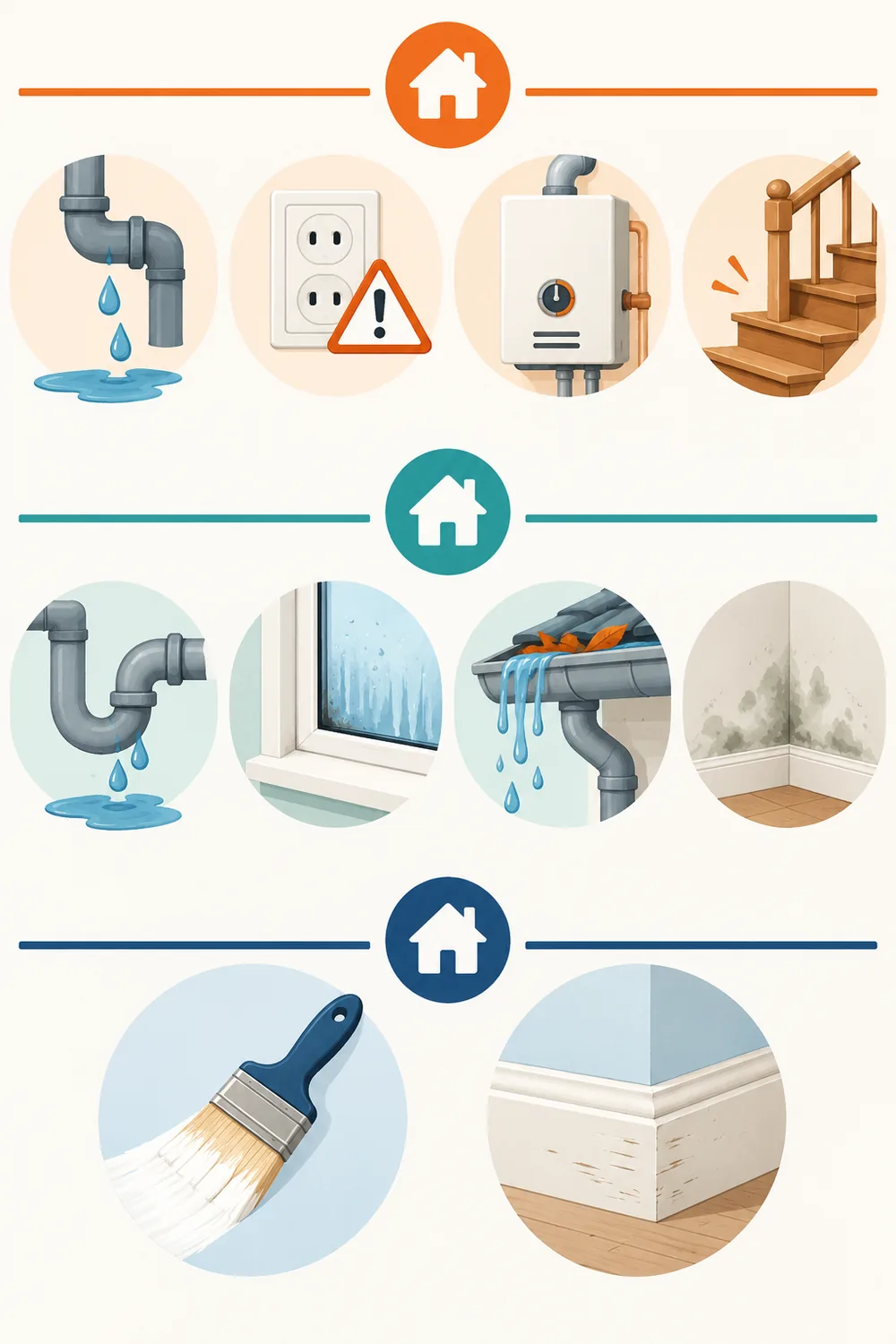
Priority guide: high, prompt assessment, routine. Urgency depends on the actual condition.
Signs a Small Repair May Be Getting Worse
Watch for a problem that returns, a stain or crack that expands, a new smell or sound, more fixtures affected, or unexplained changes in utility use. Note dates, photos and circumstances so a professional can investigate efficiently. Avoid repeatedly covering visible damage without understanding why it appeared.
Why Delaying Repairs Can Cost More
An unresolved leak can wet a larger area; an exterior opening can affect adjacent finishes; a recurring problem can require broader investigation. Our renovation budget guide explains planning for uncertain scope.
DIY or Professional Repair?
Basic tasks such as replacing a light bulb, changing an accessible filter according to its manual, routine cleaning or replacing easy-to-reach weather stripping may be reasonable for a capable homeowner. Stop if access is unsafe or the task exposes wiring, gas, contaminated water or suspected structural damage. Electrical systems, persistent leaks, roofing, heating equipment, major moisture and structural concerns call for qualified assessment.
Questions to Ask Before Hiring a Home Repair Professional
For a non-emergency request, ask: Have you handled similar problems? What might be causing this sign? What work, materials and cleanup are included? What is excluded? Could hidden conditions change the price? What is the estimate and timing? Are permits or inspections relevant, and who handles them? What follow-up support is offered? See our seven questions before hiring.
Why Compare Quotes for Non-Emergency Repairs?
Written quotes can reveal differences in scope, materials, timing and exclusions. Give businesses the same description and photos, then compare proposed work. Do not delay emergency help to gather estimates. For planned work, read why multiple quotes help and how to compare service quotes. For provider selection, see our Canadian local-professional guide.
Home Repair Warning Sign Checklist
- ☐ Active water leak or spreading stain
- ☐ Repeated breaker trips, electrical heat or burning smell
- ☐ Roof leak or visible roof damage
- ☐ Growing foundation crack or new movement
- ☐ Heating system not working correctly
- ☐ Repeated drain backup or sewage odour
- ☐ Persistent moisture or returning mould
- ☐ Water pooling near the foundation
- ☐ Loose stairs, railings or supports
- ☐ Recurring unexplained damage
How Dr. Octopus Can Help You Find Home Repair Professionals
Browse all categories, the companies directory, or relevant Plumbing, Electrical and Renovation categories. For a non-emergency repair, post a request with the location, visible signs, timing and photos. Participating businesses may respond; compare available company information and proposed scope before choosing whom to contact. A listing or request does not guarantee a response, qualification, repair result or price. For immediate danger, use emergency or utility services instead of waiting for marketplace replies.